Exploring Spanish Interior Design: Key Characteristics, Historical Influences, and Popular Elements
Step into the world of Spanish interior design, where rich history and vibrant aesthetics come together to create spaces that are both timeless and captivating. From traditional furniture to architectural features, this overview will delve into the essence of Spanish design, offering insights that inspire and delight.
In the following paragraphs, we will explore the color palette, furniture, decor, architectural features, and lighting that define Spanish interior design, providing a comprehensive guide for those seeking to infuse their spaces with a touch of Spanish flair.
Overview of Spanish Interior Design
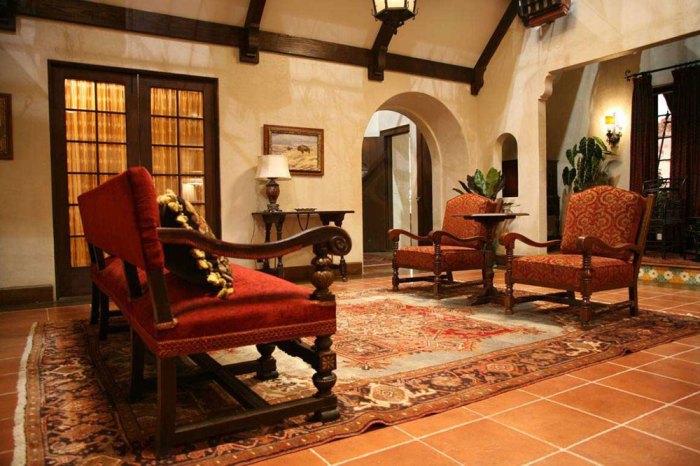
Spanish interior design is known for its warm and inviting aesthetic, blending traditional elements with modern touches. Key characteristics include vibrant colors, intricate tile work, wrought iron accents, and rich textures.
Historical Influences
Spanish interior design is heavily influenced by its rich history, including Moorish, Medieval, and Baroque styles. The Moors brought intricate tile work and geometric patterns, while the Baroque period introduced ornate detailing and luxurious fabrics.
Popular Elements
- Vibrant Colors: Bold hues like terracotta, deep blues, and earthy tones are commonly used in Spanish interiors.
- Tile Work: Intricate mosaic tiles can be found on floors, walls, and even ceilings, adding a touch of elegance.
- Wrought Iron: Ornate ironwork is a staple in Spanish design, seen in light fixtures, furniture, and decorative accents.
- Rich Textures: From rustic wood beams to plush textiles, Spanish interiors embrace a variety of textures for a cozy atmosphere.
Color Palette in Spanish Interior Design
In Spanish interior design, the color palette tends to be warm and inviting, reflecting the country's vibrant culture and rich history. Different colors are strategically used to create a cozy and welcoming atmosphere in Spanish interiors.
Earthy Tones and Terracotta
Earthy tones such as ochre, sienna, and terracotta are commonly used in Spanish interior design to evoke a sense of warmth and comfort. These colors are often found on walls, floors, and furniture, adding a rustic and traditional feel to the space.
Rich Blues and Greens
Rich blues and deep greens are also popular in Spanish interiors, especially in accents like tiles, textiles, and decor. These colors are inspired by the Mediterranean sea and lush landscapes, bringing a refreshing and calming element to the design.
Warm Reds and Oranges
Warm reds and oranges are frequently used in Spanish interior design to add a pop of color and energy to the space. From vibrant reds to burnt oranges, these hues can be seen in upholstery, rugs, and decorative elements, creating a lively and dynamic ambiance.
Furniture and Decor in Spanish Interior Design
Spanish interior design is known for its traditional furniture pieces and decor elements that add a unique charm to spaces. Let's explore some key aspects of furniture and decor in Spanish design.
Traditional Furniture Pieces in Spanish Interior Design
Traditional Spanish interior design often incorporates furniture pieces such as:
- Carved wooden tables and chairs with intricate designs
- Rustic wooden cabinets and dressers
- Leather sofas and armchairs
- Canopy beds with ornate headboards
Decor Elements in Spanish Interior Design
In addition to furniture, decor elements like ceramics, wrought iron, and pottery play a significant role in enhancing the Spanish aesthetic:
- Colorful ceramic tiles used for flooring or wall accents
- Wrought iron chandeliers, lamps, and decorative elements
- Hand-painted pottery and ceramics for tabletops and displays
- Tapestries and textiles with intricate patterns and vibrant colors
Incorporating Spanish-Style Furniture and Decor into Modern Interiors
To bring a touch of Spanish flair to modern interiors, consider the following tips:
- Mix traditional Spanish furniture pieces with contemporary items for a balanced look
- Use wrought iron accents or light fixtures to add a touch of authenticity
- Incorporate colorful ceramic tiles in kitchen backsplashes or bathroom walls
- Accessorize with hand-painted pottery or textiles for a pop of color and texture
Architectural Features in Spanish Interior Design
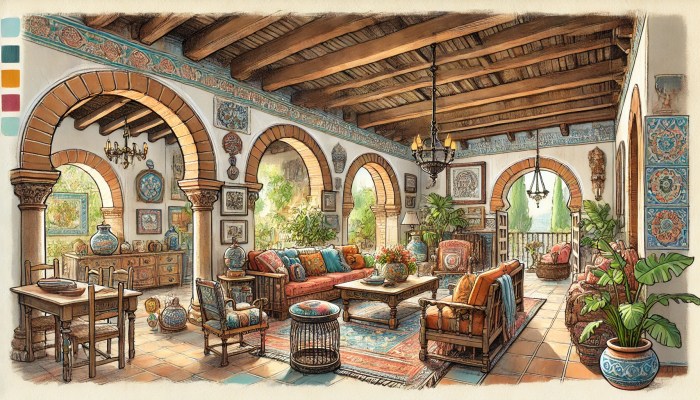
In Spanish interior design, architectural features play a crucial role in defining the overall aesthetic of a space. Elements such as arches, tiles, and woodwork are commonly found in Spanish-inspired homes, adding character and charm to the interiors.
Arches
Arches are a prominent architectural feature in Spanish interior design, often seen in doorways, windows, and passageways. These arched openings add a sense of grandeur and elegance to a space, creating a visually appealing focal point. They are typically made of stucco or brick and may feature intricate detailing or decorative elements.
Tiles
Tiles are another key element in Spanish interior design, particularly in areas such as kitchens, bathrooms, and outdoor spaces. Spanish tiles often feature vibrant colors, intricate patterns, and hand-painted designs, adding a pop of visual interest to the decor. Whether used on floors, walls, or countertops, tiles help create a unique and authentic Spanish aesthetic.
Woodwork
Woodwork, such as exposed ceiling beams, carved doors, and ornate cabinetry, is a common feature in Spanish-inspired homes. These wooden elements add warmth, texture, and a rustic charm to the interiors. Whether left natural or painted in rich hues, woodwork contributes to the overall cozy and inviting atmosphere of a space.
Lighting in Spanish Interior Design
Lighting plays a crucial role in Spanish interior design, as it helps create the perfect ambiance and highlights the unique architectural features and decor elements.
Utilization of Natural Light
Natural light is a key element in Spanish interior design, as it is used to create a bright and airy atmosphere in the space. Large windows, skylights, and open floor plans are common features that allow natural light to flow freely throughout the rooms.
Selecting Lighting Fixtures
When choosing lighting fixtures for Spanish-style interiors, it is important to opt for fixtures that complement the overall design aesthetic. Wrought iron chandeliers, sconces, and pendant lights with intricate detailing are popular choices that add a touch of elegance and sophistication to the space.
Closing Notes
As we conclude our exploration of Spanish interior design, we are reminded of the beauty and elegance that define this style. From the warmth of the color palette to the intricate architectural details, each element plays a crucial role in shaping spaces that exude charm and character.
Whether you're a design enthusiast or simply looking to revamp your home, embracing Spanish design principles can transform any interior into a truly enchanting sanctuary.
Questions Often Asked
What are the key characteristics of Spanish interior design?
Spanish interior design is known for its use of warm colors, intricate detailing, and a mix of traditional and ornate elements that create a cozy and inviting atmosphere.
How can I incorporate Spanish-style furniture into modern interiors?
To incorporate Spanish-style furniture into modern interiors, focus on pieces with intricate carvings, dark wood finishes, and ornate detailing that can add a touch of Old World charm to contemporary spaces.
What role does lighting play in Spanish interior design?
Lighting is crucial in Spanish interior design as it helps create a bright and airy ambiance. Natural light is often maximized, and the use of warm-toned fixtures enhances the overall aesthetic of the space.