Crafting an Industrial Interior: Key Elements and Design Tips
Delve into the world of industrial interior design, where rugged aesthetics meet modern charm. From raw materials to vintage furniture pieces, this style is all about creating a unique and edgy look that stands out.
Let's explore the essential components that define industrial interior design and how you can incorporate them into your living or working space.
Overview of Industrial Interior
Industrial interior design is characterized by its raw, unfinished look, with elements like exposed brick walls, concrete floors, and metal fixtures. The style often incorporates salvaged materials, vintage furniture, and a color palette of neutrals and earth tones.Industrial interior design has its roots in the conversion of old factories, warehouses, and industrial spaces into living or working areas.
This design style emerged in the late 20th century as a way to repurpose these industrial buildings and showcase their unique architectural features.Famous examples of industrial interior design spaces include the Chelsea Market in New York City, which was once a biscuit factory and is now a bustling marketplace with exposed pipes and brick walls.
Another notable example is the Ace Hotel in Los Angeles, which features a mix of vintage furniture, industrial lighting, and concrete floors to create a trendy and edgy vibe.
Elements of Industrial Interior
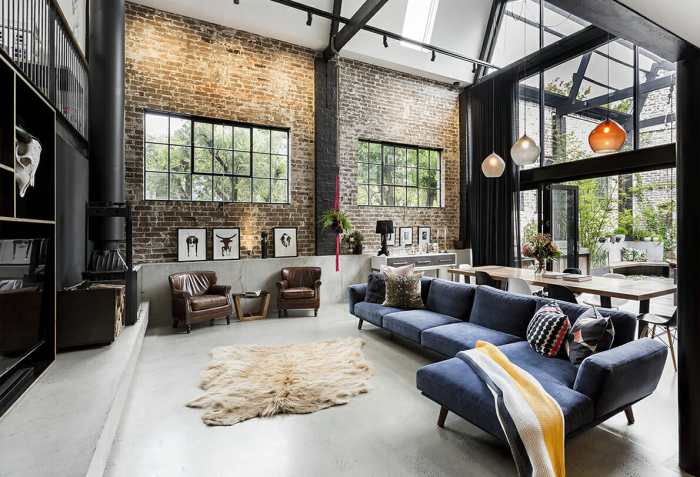
Industrial interior design is characterized by a unique blend of raw, unfinished elements combined with sleek, modern finishes. The following elements define industrial interior design:
Raw Materials
- Metal: Metal elements such as steel, iron, and aluminum are commonly used in industrial design to add a rugged, utilitarian look.
- Wood: Reclaimed wood or distressed wood is often incorporated into industrial interiors to bring warmth and contrast to the industrial aesthetic.
- Exposed Bricks: Exposed brick walls are a hallmark of industrial design, adding texture and history to the space.
Industrial Lighting
Industrial lighting plays a crucial role in creating the right ambiance in industrial interiors. The use of pendant lights, exposed bulbs, and vintage fixtures can enhance the industrial look while providing ample illumination. Lighting fixtures with metal finishes or industrial-style designs are commonly used to complement the raw materials and overall aesthetic of industrial interior design.
Color Palette and Textures
When it comes to industrial interior design, the color palette typically revolves around neutral tones such as grey, black, white, and brown. These colors help create a raw and unfinished look that is characteristic of industrial spaces.Textures play a crucial role in enhancing the industrial aesthetic.
Distressed wood, exposed brick walls, and aged metals are commonly used to add depth and character to the space. These textures bring a sense of history and authenticity, contributing to the overall industrial vibe.
Incorporating Contrasting Textures
In order to create a balanced industrial interior, it's important to incorporate contrasting textures. For example, pairing rough textures like exposed concrete walls with smoother surfaces like polished concrete floors can create an interesting dynamic. Mixing materials such as leather, glass, and concrete can also add visual interest and richness to the space.
Furniture and Decor
In industrial interior design, furniture and decor play a crucial role in setting the tone and aesthetic of the space. Here, we will explore the characteristic furniture pieces, the importance of vintage industrial furniture, and how to mix modern and industrial pieces for a unique look.
Characteristic Furniture Pieces
Industrial interior design is known for its use of raw and unfinished materials, which is reflected in the furniture pieces. Some characteristic furniture items found in industrial spaces include:
- Raw wood and metal tables
- Repurposed vintage storage cabinets
- Industrial-style lighting fixtures
- Exposed metal piping and ductwork
Vintage Industrial Furniture
Using vintage industrial furniture in your space can help create an authentic industrial look. These pieces often have a history and unique character that adds depth to the design. Look for items like:
- Old factory carts repurposed as coffee tables
- Vintage metal stools or chairs
- Industrial shelving units with a worn patina
Mixing Modern and Industrial Furniture
To achieve a unique aesthetic in your industrial space, consider mixing modern and industrial furniture pieces. This juxtaposition can create visual interest and balance in the design. Here are some ideas on how to mix the two styles:
- Pair a sleek modern sofa with a rustic industrial coffee table
- Combine a contemporary dining table with vintage industrial chairs
- Use industrial lighting fixtures in a modern minimalist space for a pop of character
Industrial Interior Spaces
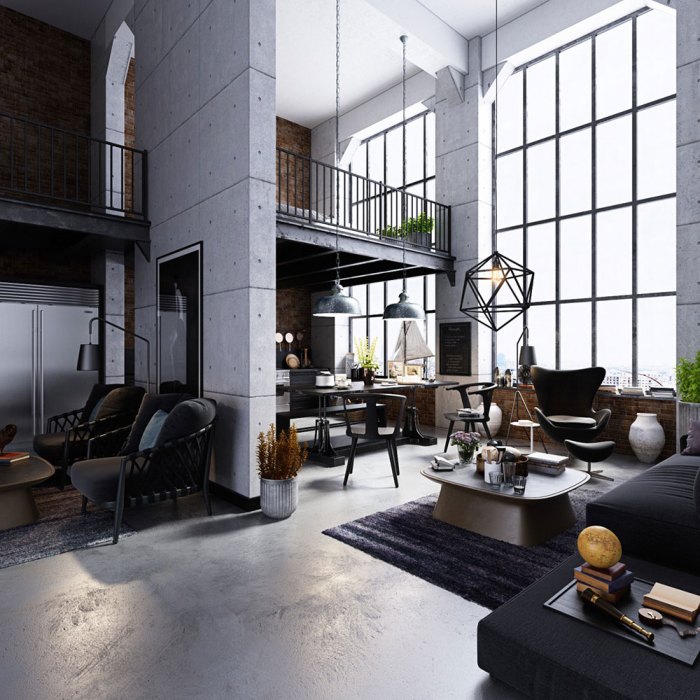
Industrial interior design is not limited to just one type of space; it can be applied to both residential and commercial spaces, offering a unique and stylish aesthetic. The raw, unfinished look of industrial design can add character and charm to any room, whether it's a cozy living room or a sleek office space.
Adaptation to Different Rooms
Industrial interior design can be adapted to various rooms within a home or office. For example, in a living room, exposed brick walls, metal accents, and vintage furniture pieces can create a warm and inviting atmosphere. In a kitchen, stainless steel appliances, concrete countertops, and industrial lighting fixtures can give a modern and edgy vibe.
In an office space, a mix of metal and wood furniture, along with open shelving and minimalist decor, can promote a creative and productive environment.
Industrial Loft Spaces
Industrial loft spaces have gained popularity in recent years, especially in urban areas. These spaces often feature high ceilings, large windows, and open floor plans, creating a sense of spaciousness and freedom. Industrial loft designs typically incorporate industrial elements like exposed ductwork, concrete floors, and metal beams, adding to the overall industrial aesthetic.
These spaces are versatile and can be customized to suit different preferences, from a cozy living area to a stylish workspace.
Final Thoughts
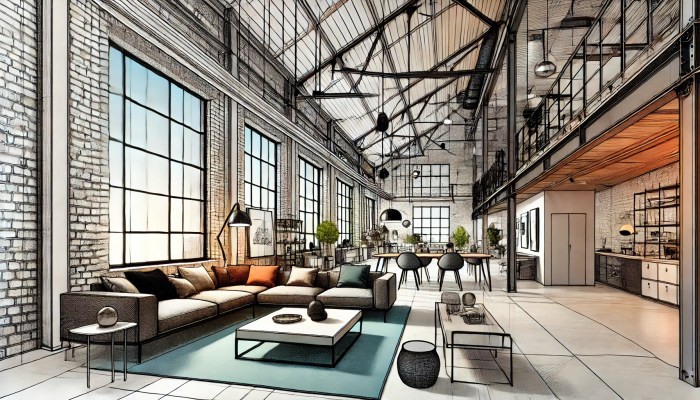
In conclusion, industrial interior design offers a blend of history and modernity, creating spaces that are both functional and visually appealing. By understanding the key elements and design principles, you can transform any room into a stylish industrial haven.
Query Resolution
What are the key characteristics of industrial interior design?
Industrial interior design typically features exposed bricks, metal accents, and a blend of raw materials for a rugged yet sophisticated look.
How can I incorporate contrasting textures in industrial interior design?
To achieve a balanced industrial interior, mix textures like distressed wood with smooth metal finishes or aged metals with sleek glass elements.
Is industrial interior design suitable for residential spaces?
Absolutely, industrial design can be adapted to various rooms in homes, adding a unique character and charm to living rooms, kitchens, and even bedrooms.